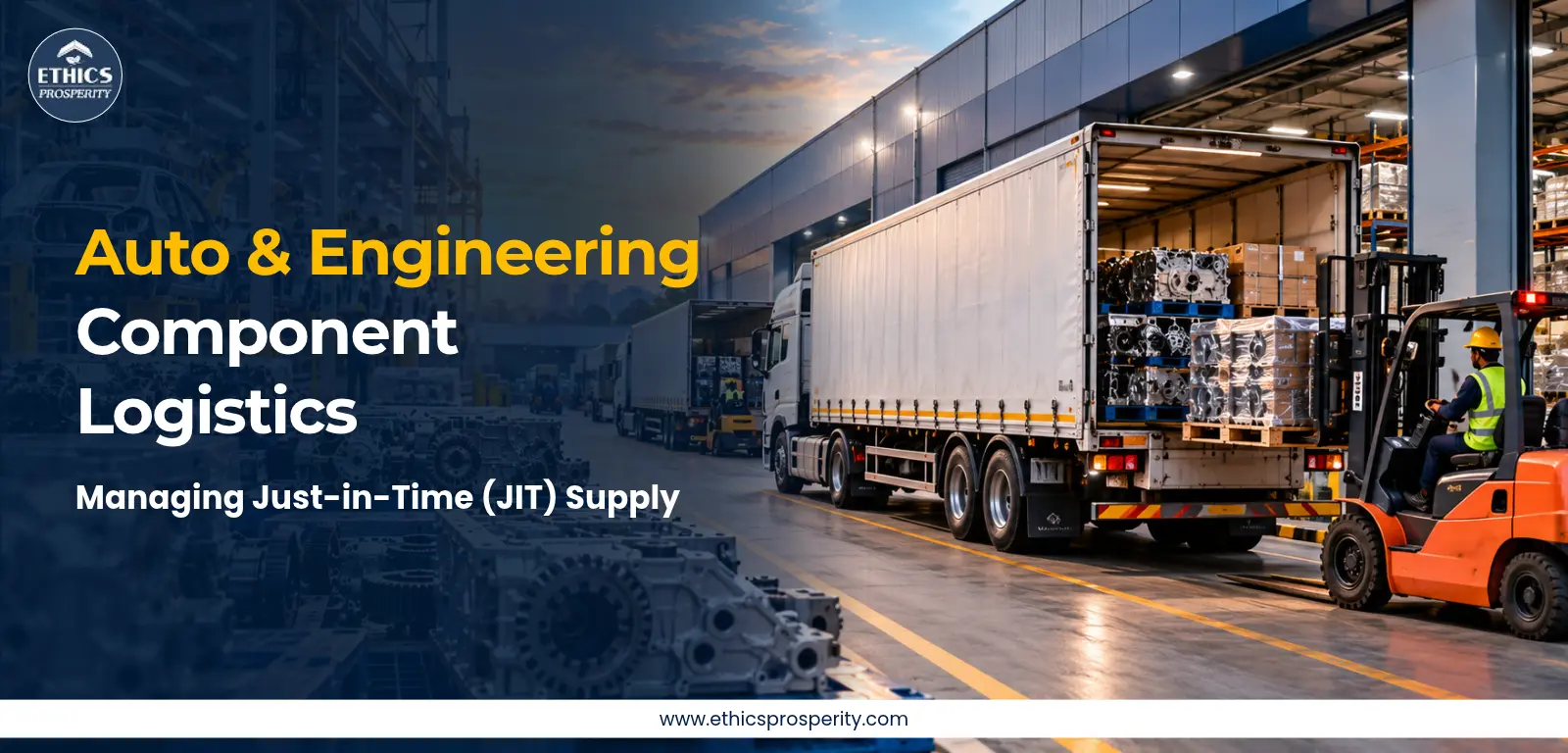
Auto & Engineering Component Logistics: Managing Just-in-Time (JIT) Supply
Automotive and engineering manufacturers operate under tight production schedules, strict quality requirements, and increasing pressure to control operating costs. A delay in receiving a critical component can interrupt an assembly line, affect delivery commitments, and increase production expenses.
This makes Auto & Engineering Component Logistics a critical part of manufacturing performance. It involves coordinating suppliers, inbound transportation, inventory, storage, component handling, and delivery to production lines so that the right materials arrive at the right place and time.
For manufacturers adopting Just-in-Time (JIT) practices, logistics must deliver more than transportation capacity. It requires reliable planning, accurate inventory visibility, disciplined execution, and the ability to respond quickly when production requirements change.
What Is Auto & Engineering Component Logistics?
Auto and engineering component logistics covers the movement and control of materials such as engine components, fasteners, electrical assemblies, bearings, castings, precision-machined parts, and other industrial inputs.
These components may come from multiple suppliers, operate under different lead times, and require specific handling or quality checks. Some parts are inexpensive but essential to assembly, while others are high-value, fragile, or difficult to replace at short notice.
Effective logistics connects supplier dispatch with receiving, inspection, storage, kitting, and production-line replenishment.
A well-designed operation also supports broader Supply chain management objectives by coordinating procurement, material planning, manufacturing schedules, and distribution rather than treating each activity as an isolated task.
Why JIT Supply Is Critical for Automotive and Engineering Manufacturing
Just-in-Time is an inventory and production approach in which materials are supplied close to the time they are needed. Its purpose is to reduce unnecessary inventory while maintaining the material availability required for uninterrupted production.
However, JIT does not mean eliminating all inventory. It means positioning the right stock at the right point in the production process, based on demand, replenishment lead times, and operational risk.
For example, an automotive assembly facility may receive selected components several times a day according to its production sequence. If a scheduled delivery misses its receiving window, the facility may have insufficient material to continue production.
A dependable End-to-end supply chain therefore needs synchronized supplier schedules, transport visibility, receiving capacity, and production consumption data.
The principal business benefits include:
-
Lower excess inventory: Reduces unnecessary working capital tied up in components.
-
Better production continuity: Improves the availability of materials at assembly and manufacturing stations.
-
More efficient space utilization: Limits the need to hold excessive quantities of slow-moving components.
-
Improved material control: Helps purchasing and operations teams identify shortages before they affect output.
-
Stronger supplier coordination: Encourages shared schedules, defined delivery windows, and consistent performance measurement.
These benefits depend on reliable execution. When inbound variability is high, reducing inventory without improving replenishment reliability can increase rather than reduce operational risk.
Key Challenges in JIT Component Logistics
1. Supplier delays and inconsistent lead times
A component may be manufactured correctly but still arrive late because of dispatch delays, traffic, vehicle breakdowns, or missed collection windows. Multiple suppliers create additional coordination requirements, particularly when components must arrive together for a common production schedule.
2. Demand fluctuations and production changes
Automotive and engineering demand can change due to revised production plans, order changes, supplier shortages, or unexpected equipment downtime. If replenishment plans are not updated promptly, manufacturers may experience shortages of critical components alongside excess stock of less urgent materials.
3. Inventory inaccuracies
A system may show stock as available even when it is damaged, awaiting inspection, allocated to another order, or stored in the wrong location. These discrepancies create avoidable delays during picking and production replenishment.
4. Component quality and traceability
Precision components may require batch identification, inspection records, controlled handling, or specific storage conditions. Poor labeling or inadequate documentation can delay material release and make it difficult to isolate affected batches when a quality issue occurs.
5. Transport and coordination costs
Frequent deliveries can improve material availability but may increase vehicle utilization costs, handling activity, and administrative workload. The challenge is to balance delivery frequency against shipment consolidation, route efficiency, component criticality, and the cost of a production interruption.
How to Build a Reliable JIT Logistics Strategy
1. Align demand forecasting with production schedules
Start with a shared view of production requirements, component consumption, supplier lead times, and planned receipts.
Material planners should distinguish between stable, predictable demand and components exposed to frequent changes. Replenishment parameters should reflect actual consumption and supplier reliability rather than relying solely on historical averages.
For critical parts, define shortage thresholds and escalation procedures so that teams can respond before a line-side stockout occurs.
2. Coordinate suppliers and inbound transportation
Establish agreed dispatch schedules, delivery slots, packaging specifications, and advance shipment notifications wherever practical.
Suppliers should know the required delivery quantities, receiving location, documentation requirements, and procedures for reporting delays. Transport teams should monitor exceptions and communicate revised arrival estimates to receiving and production teams.
Where several suppliers serve the same facility, route planning and consolidated collection may reduce unnecessary trips, provided consolidation does not jeopardize time-sensitive deliveries.
3. Improve inventory visibility and traceability
Inventory accuracy is essential to JIT execution. Barcode scanning, location-level stock records, batch identification, and integrated warehouse or manufacturing systems can help teams track component movements.
A practical control process should cover receipt, quality inspection, put-away, picking, line-side issue, returns, and stock adjustments.
The objective is not simply to digitize inventory records. It is to make those records dependable enough for purchasing and production teams to make timely decisions.
4. Design warehousing around production requirements
Component storage should reflect demand frequency, handling requirements, replenishment cycles, and proximity to production lines.
A well-planned logistics and warehouse operation separates receiving, inspection, storage, staging, and dispatch activities to reduce congestion and unnecessary movement.
Appropriate warehouse storage solutions may include rack systems, dedicated component bins, protected storage for sensitive parts, and clearly identified staging areas.
Facilities should also define replenishment routes and line-side delivery windows. Material handlers need accurate pick lists, clear location identifiers, and procedures for urgent replenishment.
5. Build transport resilience and contingency plans
JIT operations need contingency arrangements for disruptions. Depending on component criticality, these may include approved alternate routes, backup carriers, emergency collections, qualified alternative suppliers, or limited safety stock.
Not every component requires the same buffer. A frequently used, easily sourced fastener may need a different policy from a specialised electronic module with a long replacement lead time.
Risk-based planning helps manufacturers protect production continuity without recreating the excess inventory that JIT is intended to control.
6. Use digital systems to manage exceptions
Warehouse management systems (WMS), transport management systems (TMS), enterprise resource planning (ERP) platforms, and supplier portals can improve coordination when their data and processes are properly integrated.
Warehouse automation can also support selected activities, such as repetitive movement, scanning, sorting, or goods-to-person picking, when volumes and process requirements justify the investment.
Technology should be introduced to solve a defined operational problem. Automating an inaccurate process or relying on incomplete data will not automatically improve performance.
How Technology Is Shaping Component Logistics in 2026
The practical direction in 2026 is toward better-connected operational data, earlier exception detection, and more responsive planning. Manufacturers and logistics providers are increasingly evaluating the following capabilities:
-
Real-time shipment visibility: Provides milestone updates and estimated arrival times to help receiving teams prepare.
-
Predictive alerts: Uses available shipment, inventory, or consumption data to flag potential shortages.
-
Integrated planning platforms: Connects procurement, supplier schedules, transport, and production requirements.
-
Digital traceability: Improves access to component, batch, and movement records.
-
Data-led route planning: Helps balance delivery windows, vehicle utilization, and transport cost.
These capabilities are not equally suitable for every facility. Implementation should depend on system compatibility, supplier participation, data quality, operating volume, and the measurable benefit expected.
Manufacturers evaluating supply chain companies should therefore look beyond technology demonstrations and ask how a provider uses operational data to manage real delivery exceptions, inventory discrepancies, and service failures.
KPIs for Measuring JIT Logistics Performance
JIT performance should be evaluated through a balanced set of service, inventory, quality, and cost measures.
|
KPI |
What it measures |
Why it matters |
|
On-time, in-full (OTIF) |
Deliveries received on time and in the required quantity |
Measures supplier and transport reliability |
|
Line-side availability |
Availability of required components at production points |
Helps identify material-related production risk |
|
Inventory accuracy |
Agreement between recorded and physical stock |
Supports dependable replenishment decisions |
|
Supplier lead-time variability |
Variation in actual replenishment time |
Helps determine suitable buffers and escalation rules |
|
Premium freight cost |
Cost of urgent or exceptional transportation |
Highlights recurring planning and reliability problems |
|
Damage and rejection rate |
Components damaged or rejected during handling and receipt |
Indicates packaging, handling, or quality issues |
Define each KPI consistently before comparing performance. For example, an OTIF target is meaningful only when the promised delivery window, quantity tolerance, and treatment of approved schedule changes are clearly established.
Set baseline measurements, assign ownership, review exceptions regularly, and track corrective actions to completion.
How to Select a Logistics Partner for Component Supply
When assessing potential Logistics Companies in India, automotive and engineering manufacturers should evaluate operational capability against their actual production requirements rather than selecting on freight rates alone.
The assessment should cover:
-
Experience handling automotive or engineering components.
-
Delivery coverage, route planning, and backup transport capacity.
-
Inventory accuracy, traceability, and shipment visibility.
-
Receiving, inspection, storage, and replenishment processes.
-
Ability to manage scheduled deliveries and urgent exceptions.
-
Documented service levels, escalation contacts, and reporting.
-
Transparent cost structures and measurable performance reviews.
A search for the top 10 warehousing companies in india may help build an initial research shortlist, but rankings alone cannot establish whether a provider is suitable for a particular manufacturing operation.
Request evidence of relevant experience, operating procedures, service metrics, implementation plans, and a clearly defined scope of responsibility before committing to a logistics arrangement.
Conclusion
Reliable component supply is built through coordinated planning, accurate inventory records, dependable transportation, disciplined warehouse execution, and clear accountability across suppliers and manufacturing teams. JIT works best when organisations reduce unnecessary stock without compromising the availability of critical materials.
For businesses evaluating their manufacturing logistics, Ethics Prosperity can be considered as a potential partner for discussing operational requirements, warehousing needs, transportation coordination, and supply chain improvement opportunities. Any engagement should begin with a clear assessment of component flows, service expectations, operational risks, and measurable business objectives.